


E-commerce
Card-not-present fraud, closed at the source, inside the existing EMV authorization.
Agentic shopping
Proof of Human Intent, confirming a person, not just an algorithm, before the dispute happens.
One dynamic security code.
Every way you pay.
Physical, virtual, and agentic commerce all run on the same EVC architecture, the same certification, and the same EMV rails. Explore how each form factor works, and how issuers move between them without a rebuild.
E-commerce
Card-not-present fraud, closed at the source, inside the existing EMV authorization.
Agentic shopping
Proof of Human Intent, confirming a person, not just an algorithm, before the dispute happens.
For banks & cardholders
Security you can see
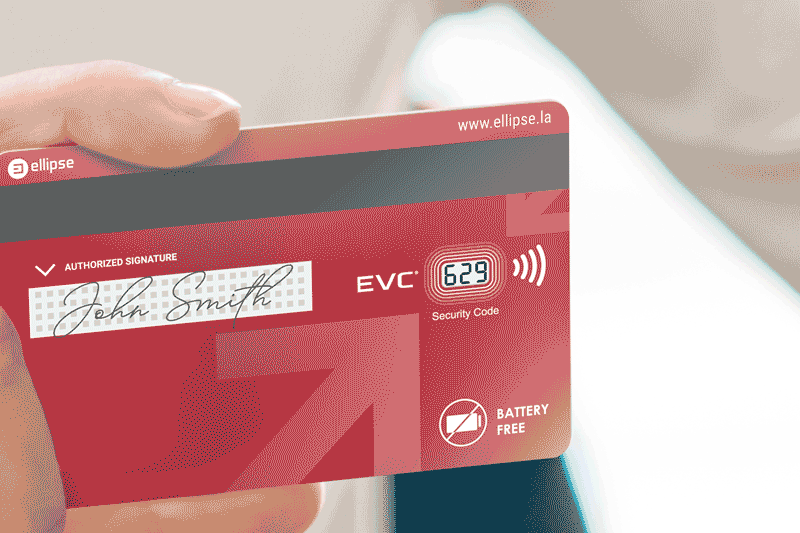
The EVC All-In-One micromodule is a drop-in replacement for a standard EMV chip. It adds a battery-free electronic paper display that shows a dynamic security code, refreshed automatically every time the card is tapped or dipped at a POS terminal, ATM, or mobile app.
Battery-free
Power is harvested from the EMV terminal itself at every tap or dip. No battery to replace, ever.
Drop-in module
ISO 7810 ID-1 compatible and EMV chip and OS agnostic, so it fits existing card production lines.
Dual interface
Works contact or contactless, with inductive coupling and direct connect power modes.
Always-on display
The 3-digit code is visible on the card itself, not hidden behind an app or a printed number.
Invisible mode
Cardholders can manually clear the on-card display to shield the code from view when the card isn't in use.
Refresh from your wrist or phone
The code can also be manually changed from the issuer's mobile app or an Apple Watch extension, not just at the terminal.


For fintechs & digital-first issuers
The same code,
everywhere it lives
EVC brings the same dCVV/dCVC protection to 100% virtual and digital cards, as a software layer rather than a physical component. Built for digital-first institutions that want dynamic security without new infrastructure.
Never leaves the transaction
Verification happens inside the EMV transaction itself, unlike other dCVV solutions that interrupt checkout for a separate verification step.
iOS, Android, web & Wearables
The virtual card refreshes its CVV/CVC directly inside the issuer's mobile app, or from an Apple Watch extension, across every major platform.
Manual refresh, anytime
If a cardholder suspects their virtual card data is compromised, they can refresh the code on demand from their phone or watch.
Compatible with existing HSMs
Integrates with the hardware security modules issuers already run, with no new server infrastructure required.
One platform, one PAN
Virtual and physical cards share the same underlying EVC platform and the same primary account number.
Card-ready when you are
Issuers can launch virtual-first and add a physical EVC card later on the same account, with no re-platforming.
EVC ON WEARABLES
Tap. Refresh. Authenticate.
All from your wrist.
EVC extends past the card and the phone to the wrist, literally from anywhere. Refresh a dynamic code, confirm an agentic purchase with Proof of Human Intent, or check a transaction the moment it happens, wherever you are and whenever it counts, without breaking stride or before the next wave.
Wherever you are
The code lives on the wrist, available mid-commute, mid-errand, or mid-anything else, not locked to a countertop or a bag.
Authenticate agentic purchases
Confirm Proof of Human Intent for an AI-initiated purchase directly from the wrist, no phone required.

One platform, either direction
Start anywhere.
Add the other format anytime.
Because physical and virtual EVC share the same platform and the same PAN, issuers are never locked into a single starting point.
Physical card
Launch with an EVC-Ready physical card first.
Virtual card
Add virtual EVC on the same account, no new integration.
Or run it in reverse: issue virtual-first for speed to market, then add a physical EVC card later as a loyalty or premium-tier upgrade, on the same account, without touching the core integration.

Built to scale with you
A single platform for every stage of growth
EVC's format-agnostic architecture turns market expansion into a configuration choice, not new capital expenditure. Every additional format, market, or account plugs into the same certified platform, extending margin instead of resetting it.

Card-heavy issuers acquire new markets
Launch EVC in digital form to reach markets and segments where physical card production and issuance logistics would otherwise slow expansion.

Digital-first fintechs graduate to physical
Start virtual-only to move fast, then add EVC-Ready physical cards on the same platform once the program is ready to scale, with no new capital outlay.

A revenue line, not just a security line
68% of cardholders say they would pay extra for EVC, and 55% would switch banks to get it (FIS, 2022), turning every activation into recurring value rather than a one-time hardware sale.


The new frontier
Prove human intent
before the dispute happens
McKinsey and PwC project $3 to $5 trillion in commerce moving through AI agents by 2030. Platforms like Alexa, ChatGPT, and Google's Universal Commerce Protocol are already making purchases autonomously on a person's behalf. Without a way to confirm human intent, every one of those purchases becomes a potential dispute, chargeback, or fraud claim.
2.4x
The dispute rate on agent-initiated transactions today, compared to human-initiated card-not-present purchases. EVC's Proof of Human Intent is built for exactly this gap.
Chargebacks911, 2026
Use cases
Anywhere EMV rails run,
EVC runs too
EVC-Ready cards work everywhere a traditional credit or debit card already works, with no new acceptance infrastructure required.
POS
Tap or dip at any EMV-compliant terminal in stores and restaurants worldwide.
ATM
The dynamic code refreshes the same way at ATMs as it does at checkout.
Mobile
Cardholders can view and manually refresh their code from their issuer's app.

Digital Wallets
Virtual EVC cards live natively inside wallet apps on iOS, Android, and web.

Invisible Mode
Cardholders manually hide the code on the physical card or inside the digital wallet, on demand.

Ghost Mode
Hides the code and deactivates the card. New cards arrive pre-deactivated, so a stolen one stays useless until the real cardholder activates it.

BUILT TO SHIP
Manufactured at scale,
not assembled by hand
Every EVC micromodule is produced on the same high-volume manufacturing lines that supply the global card industry, so issuers get certified hardware on card-industry lead times, not a pilot run.
Card-industry lead times
Production runs on the same schedules and volumes issuers already plan around, with no separate hardware timeline to manage.
Consistent quality at volume
Every micromodule passes the same certification and quality control before it reaches a card body.
Supply ready for national rollouts
Manufacturing capacity is built for issuer-scale deployment, not limited pilot batches.
HOW IT WORKS
Simple for cardholders.
Powerful for everyone.
EVC works within your existing habits. No new apps required, no behavior change, no friction.

1
The cardholder uses a physical EVC-Ready card to make a purchase as normal, tapping or dipping at any EMV terminal.
2
The EVC dynamic security code refreshes automatically on the card's e-paper display with every card-present transaction.

3
Stolen card data becomes worthless, and card-not-present fraud drops out of the equation.


WHY NOW
Fraud is winning. The payments landscape is fracturing. EVC changes the game.
Physical cards, virtual cards, mobile wallets, digital payments, agentic AI: every new payment channel opens a new fraud vulnerability, and issuers have traditionally needed a different vendor to defend each one. EVC ONE ends that patchwork. One platform, one security architecture, complete protection, before the next channel becomes the next liability.
$49B
Projected global cost of CNP fraud by 2030
Nilson Report, 2023
73%
Of all card-related fraud happens in a card-not-present scenario
PYMNTS, 2023
75%
Of consumers would switch banks over inadequate fraud protection
Jumio Online Identity Study, 2024
$3-5T
In global commerce expected to be mediated by AI agents by 2030
McKinsey / PWC